What Is CARICOM?
The Caribbean Community is one of the oldest continuously functioning regional organisations in the developing world. This publication explains what CARICOM is, what it does and where to read the primary documents.
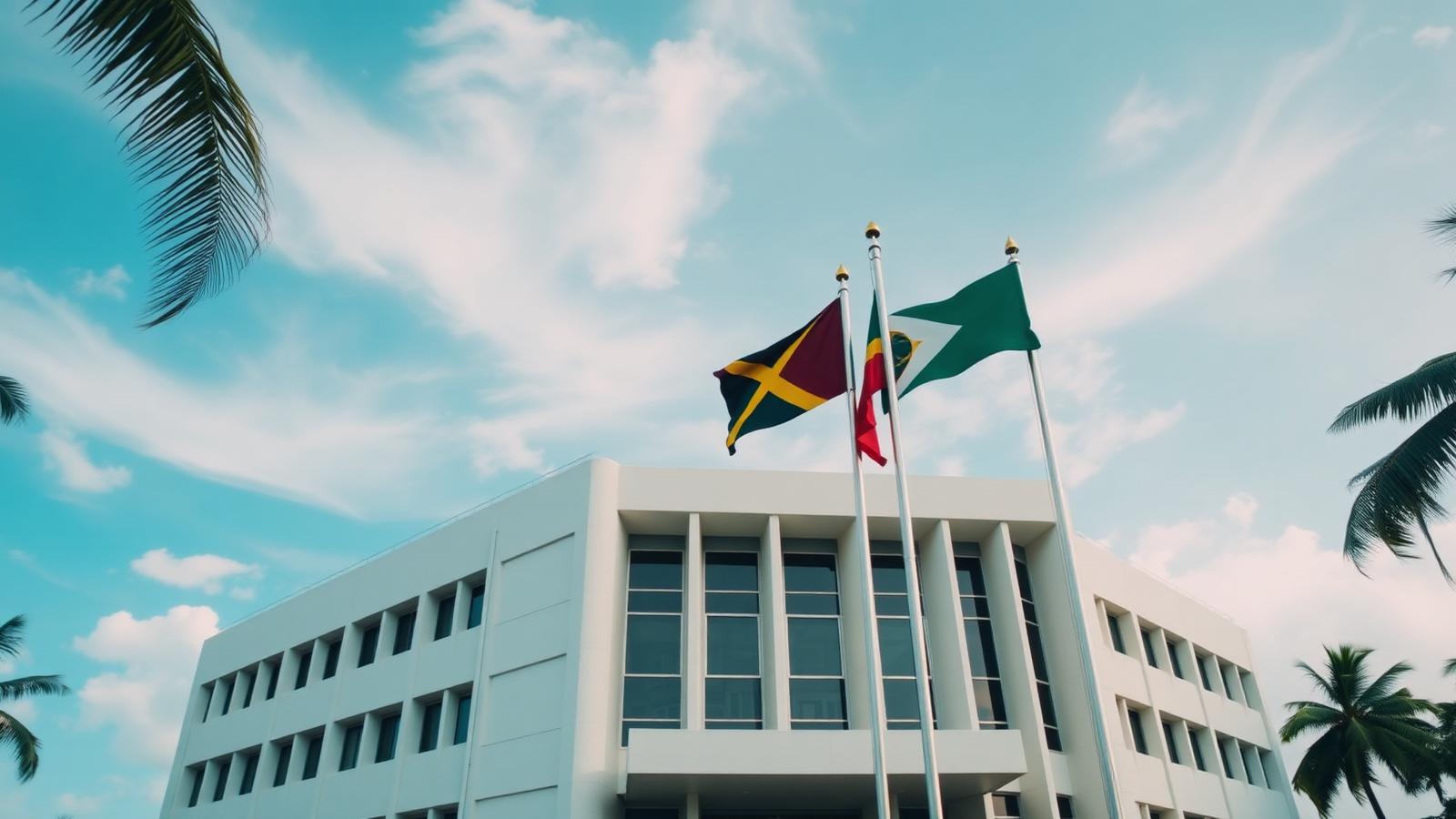
Regional cooperation among Caribbean states did not begin with CARICOM, but the Caribbean Community — established by the Treaty of Chaguaramas in 1973 — is by some distance the most consequential regional organisation the English-speaking Caribbean has produced. It is also one of the most misunderstood, often reduced in public conversation to a set of meetings that produce little.
This publication sets out what CARICOM actually is, what it does, who its member states are and where to read the primary documents.
The origin
The Treaty of Chaguaramas was signed on 4 July 1973 by Barbados, Guyana, Jamaica and Trinidad and Tobago. It established both the Caribbean Community and the Caribbean Common Market. CARICOM was, in effect, the successor institution to the Caribbean Free Trade Association (CARIFTA), which had been established in 1968.
The original Treaty was substantially revised through the Revised Treaty of Chaguaramas, which came into force in 2006. The revised Treaty established the CARICOM Single Market and Economy (CSME) and modernised the institutional architecture of the Community.
Member States
CARICOM has 15 full Member States and 5 Associate Members. The full Member States are: Antigua and Barbuda, The Bahamas (a member of the Community but not of the CSME), Barbados, Belize, Dominica, Grenada, Guyana, Haiti, Jamaica, Montserrat, Saint Kitts and Nevis, Saint Lucia, Saint Vincent and the Grenadines, Suriname and Trinidad and Tobago.
The Associate Members are British Overseas Territories that participate in specific Community activities: Anguilla, Bermuda, the British Virgin Islands, the Cayman Islands and the Turks and Caicos Islands.
What CARICOM does
CARICOM's stated objectives, set out in the Revised Treaty, cover four core areas: economic integration through the CSME, foreign policy coordination, human and social development, and functional cooperation in areas such as health, education, disaster management and security.
Economic integration
The CARICOM Single Market and Economy is the central economic project. It provides for the free movement of goods, services, capital and — for approved categories of skilled workers — labour among participating Member States. Progress has been uneven, and the extent of implementation varies by area and by country, but the framework is in place.
Foreign policy coordination
CARICOM Member States regularly coordinate positions in the United Nations, the Organization of American States and international climate negotiations. Small states carry more diplomatic weight when they act together than when they act individually, and this is one of the most visible functional benefits of the Community.
Functional cooperation
Some of CARICOM's most tangible achievements are in specialised cooperation. The Caribbean Public Health Agency (CARPHA), the Caribbean Disaster Emergency Management Agency (CDEMA), the Caribbean Court of Justice (CCJ), the Caribbean Examinations Council (CXC) and the University of the West Indies are all products or partners of Caribbean regionalism. Each of these institutions delivers services that no individual small Member State could replicate on its own.
Structure
The principal organs of the Community are the Conference of Heads of Government, which is the supreme decision-making body, and the Community Council of Ministers. These are supported by a number of Councils responsible for particular policy areas — for trade and economic development, for foreign and community relations, for human and social development, for finance and planning, and for national security and law enforcement.
The CARICOM Secretariat, headquartered in Guyana, provides technical and administrative support and is led by a Secretary-General.
Achievements
Among the achievements most often cited in Caribbean scholarship:
- the establishment of the CSME
- the establishment of the Caribbean Court of Justice, both as the region's highest appellate court for participating states and as an original jurisdiction interpreting the Revised Treaty
- the maintenance of a regional voice in international climate diplomacy through the Alliance of Small Island States
- the coordinated regional response to public health emergencies through CARPHA
- the establishment of the CSME Skills Certificate regime, which facilitates intra-regional labour mobility for approved categories
None of these achievements is complete, but each is substantial.
Challenges
Public commentary on CARICOM often focuses on where it has not delivered. The most commonly cited challenges include:
- uneven implementation of Community decisions at the national level
- resource constraints at the Secretariat and specialised institutions
- variable political commitment across administrations
- persistent asymmetries in size and structure between Member States
- limited public understanding of the Community's role and functions
These are structural challenges, not scandalous ones. They are the ordinary difficulties of regionalism among sovereign states.
Where to read further
The Revised Treaty of Chaguaramas, the Communiqués of the Conference of Heads of Government, the Community's annual reports and the reports of the CCJ and CARPHA are the primary documents. All are published by CARICOM and its institutions.
The Caribbean Current will continue to publish evidence-based explainers on regional integration. Educated citizens are essential to a functional Community.
Sources & References
Verify every claim in this article
The Caribbean Current links to primary sources whenever possible. Direct links to official documents are marked below.
- Caribbean Community (CARICOM)government
- Revised Treaty of Chaguaramas (2001)primary
- Caribbean Court of Justicegovernment
- Caribbean Public Health Agency (CARPHA)government
- Caribbean Disaster Emergency Management Agency (CDEMA)government
Related
More from The Caribbean Current
Regional Integration in the Caribbean
Regional integration in the Caribbean is easy to talk about in the abstract and harder to describe accurately. This publication sets out how integration actually works: trade, free movement, economic cooperation and shared institutions.
The Caribbean Current · Jul 10, 2026 · 10 min read
The Caribbean in the Global Economy
The Caribbean is a small collection of economies in a large and often turbulent global system. This publication maps how the region fits into the global economy and where the primary evidence lives.
The Caribbean Current · Jul 23, 2026 · 10 min read

Reparations Explained: Why Caribbean Nations Continue Their Fight for Justice
Reparations are one of the most misunderstood questions in modern Caribbean public life. This publication sets out what reparations actually mean, what the historical record shows, and how CARICOM's Ten-Point Plan frames the case for reparatory justice.
The Caribbean Current · Jun 13, 2026 · 12 min read