
Regional Integration in the Caribbean
Regional integration in the Caribbean is easy to talk about in the abstract and harder to describe accurately. This publication sets out how integration actually works: trade, free movement, economic cooperation and shared institutions.
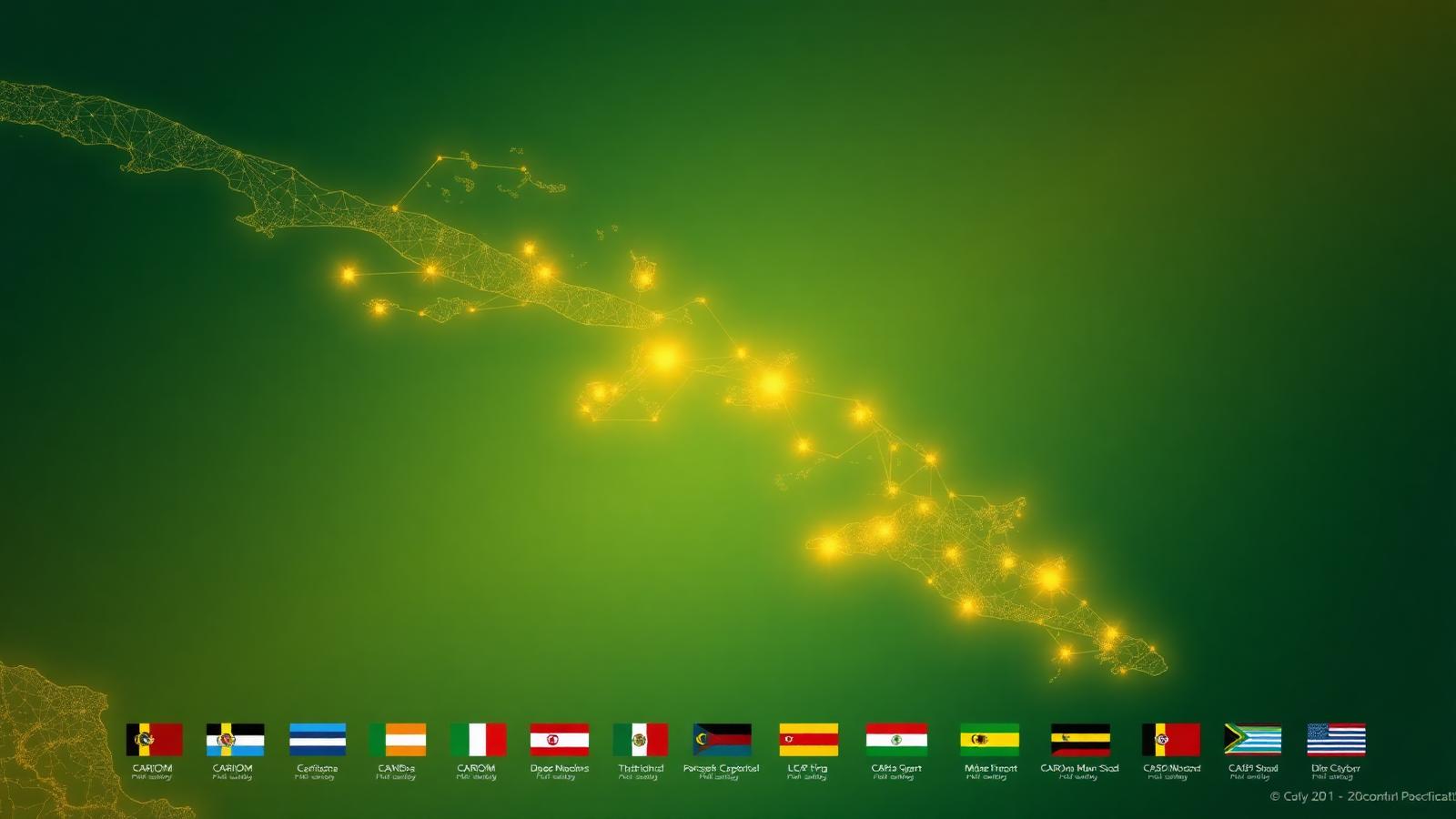
Regional integration is an idea Caribbean politicians have discussed for as long as the region has been politically independent, and one that ordinary citizens experience whenever they travel, work or study in another CARICOM state. It is easy to talk about in the abstract and harder to describe accurately.
This publication sets out how Caribbean regional integration actually works in practice: trade, free movement, economic cooperation and shared institutions. It focuses on the Caribbean Community, which is the region's principal integration project, and refers where appropriate to the Organisation of Eastern Caribbean States (OECS), whose deeper integration model complements the CARICOM framework.
The framework
The legal foundation of contemporary Caribbean regional integration is the Revised Treaty of Chaguaramas, which came into force in 2006. It replaced the original 1973 Treaty and established the CARICOM Single Market and Economy (CSME). The CSME provides for the free movement of goods, services, capital and — for approved categories of skilled workers — labour among participating Member States.
The Bahamas is a member of the Caribbean Community but does not participate in the CSME. Haiti participates in the Community and has been progressively integrating into the CSME.
The OECS operates a deeper economic union under the Revised Treaty of Basseterre (2010), which established the OECS Economic Union with a single financial and economic space and a common currency for most of its members administered by the Eastern Caribbean Central Bank.
Trade
The Common External Tariff, which applies to imports from outside the Community, is the visible face of CARICOM trade policy. Rules of origin determine when a good qualifies as originating in the Community and therefore moves within it without paying the Common External Tariff.
The Community has also negotiated trade agreements with external partners — most notably the CARIFORUM–European Union Economic Partnership Agreement, which came into force in 2008 and covers trade in goods, trade in services and investment.
Free movement
Free movement is where regional integration touches everyday life. The CSME provides for the intra-regional movement of specified categories of skilled workers under the CARICOM Skills Certificate regime. Categories eligible for CARICOM Skills Certificates have been progressively expanded over time; the CARICOM Secretariat maintains the current list.
For all CARICOM nationals, indefinite entry rights and hassle-free travel are subjects of ongoing decisions of the Conference of Heads of Government. Implementation varies by Member State, and the practical experience of travelling within the region is often the most direct test of the integration project citizens have.
Economic cooperation
Beyond trade and free movement, regional cooperation covers monetary, financial, industrial, agricultural and infrastructure policy. Specific institutions carry particular responsibilities:
- The Caribbean Development Bank finances development projects across the region.
- The CARICOM Regional Organisation for Standards and Quality supports harmonised technical standards.
- The Caribbean Regional Fisheries Mechanism coordinates fisheries policy.
- The Caribbean Regional Communications Infrastructure Programme supports digital infrastructure.
These institutions do work that no individual small state could deliver on its own.
Shared institutions
Some of the Community's most tangible achievements are its shared institutions. Among them:
- The University of the West Indies, one of the oldest regional universities in the world, with campuses in Jamaica, Trinidad and Tobago, Barbados and — as an Open Campus — across the region.
- The Caribbean Examinations Council, which administers the region's standard secondary and post-secondary examinations.
- The Caribbean Court of Justice, which serves as the region's highest appellate court for participating states and as the original jurisdiction for interpretation of the Revised Treaty.
- The Caribbean Public Health Agency, which coordinated the region's response to the COVID-19 pandemic and continues to lead on communicable disease surveillance and response.
- The Caribbean Disaster Emergency Management Agency, which coordinates disaster preparedness and response.
The challenges
Regional integration in the Caribbean faces well-documented challenges:
- Uneven national implementation of Community decisions.
- Limited resources at the CARICOM Secretariat and the specialised institutions.
- Political and economic asymmetries among Member States.
- The physical geography of small island states, which raises the real cost of trade and mobility.
None of these is easily solved, and none suggests that the integration project is failing. They are the structural difficulties of building shared institutions across sovereign states.
Where to read further
The Revised Treaty of Chaguaramas, the CARICOM Secretariat's annual reports, the OECS Commission's publications and the Communiqués of the Conference of Heads of Government are the primary documents. Academic scholarship at The University of the West Indies provides interpretive depth.
The Caribbean Current will continue to publish evidence-based coverage of regional integration. Understanding how it actually works is a form of civic literacy Caribbean citizens ought to hold as their own.
Sources & References
Verify every claim in this article
The Caribbean Current links to primary sources whenever possible. Direct links to official documents are marked below.
Related
More from The Caribbean Current
What Is CARICOM?
The Caribbean Community is one of the oldest continuously functioning regional organisations in the developing world. This publication explains what CARICOM is, what it does and where to read the primary documents.
The Caribbean Current · Jun 25, 2026 · 10 min read
The Caribbean in the Global Economy
The Caribbean is a small collection of economies in a large and often turbulent global system. This publication maps how the region fits into the global economy and where the primary evidence lives.
The Caribbean Current · Jul 23, 2026 · 10 min read

Reparations Explained: Why Caribbean Nations Continue Their Fight for Justice
Reparations are one of the most misunderstood questions in modern Caribbean public life. This publication sets out what reparations actually mean, what the historical record shows, and how CARICOM's Ten-Point Plan frames the case for reparatory justice.
The Caribbean Current · Jun 13, 2026 · 12 min read