
The Caribbean in the Global Economy
The Caribbean is a small collection of economies in a large and often turbulent global system. This publication maps how the region fits into the global economy and where the primary evidence lives.
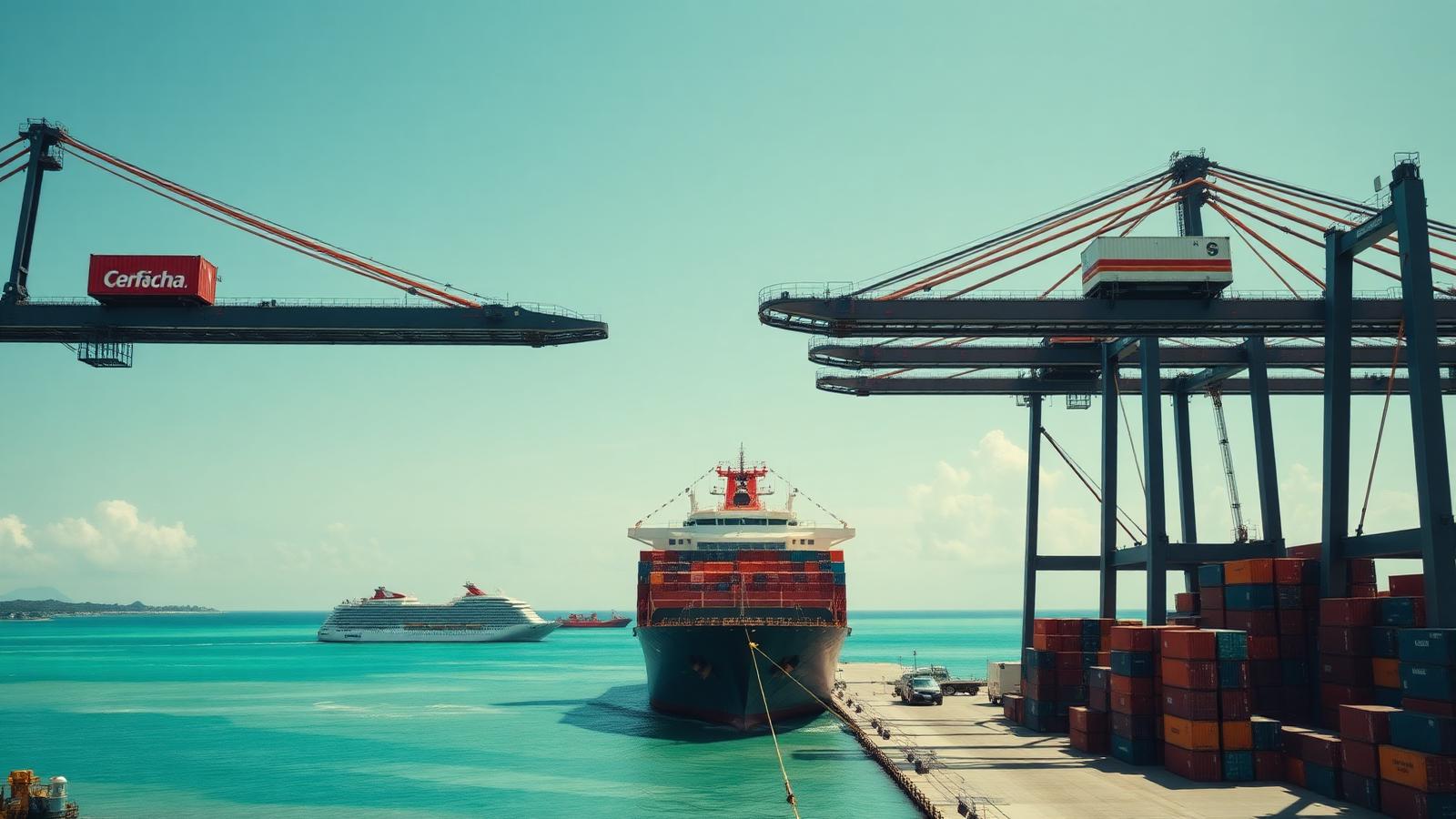
The Caribbean is a small collection of economies in a large and often turbulent global system. Its aggregate weight in world output is modest. Its exposure to global economic conditions — through trade, tourism, remittances, finance and climate — is very large. Understanding how the region fits into the global economy is essential to understanding almost any policy question that faces its member states.
This publication maps the principal channels through which the Caribbean is connected to the wider world, and points to the primary sources that document each of them.
Small, open, exposed
Caribbean economies are described in the technical literature as small open economies. They are small in absolute terms. They are open in the sense that international trade, international finance and international travel are large relative to domestic activity. And they are exposed to shocks originating outside the region — commodity price cycles, financial cycles, pandemics, geopolitical disruptions and climate events.
This combination has policy consequences that are more consequential than they are often recognised to be. Policy space that is large in a big continental economy is often much smaller in an island state whose exchange rate, budget and social safety net all have to absorb external shocks.
Tourism
Tourism is the single most important external sector for many Caribbean economies. Arrivals data, published by national tourism agencies and aggregated by the Caribbean Tourism Organization, show the region as one of the most tourism-dependent parts of the world.
Tourism links the Caribbean to a small number of large source markets — principally the United States, Canada and the United Kingdom, along with growing shares from Europe and Latin America. It therefore transmits the economic conditions of those markets directly into Caribbean output, employment and government revenues.
The COVID-19 pandemic made this exposure vivid. The near-total shutdown of international travel in 2020 produced sharp GDP contractions across the tourism-dependent Caribbean. The subsequent recovery, tracked in the Caribbean Tourism Organization's statistics, is one of the clearest illustrations of how quickly external conditions can reshape Caribbean output.
Climate
The Caribbean is one of the world regions most exposed to climate risk. Small island states face particular vulnerability to sea-level rise, tropical cyclone intensification, ocean acidification and coral reef degradation. These are not future scenarios; they are documented in the Intergovernmental Panel on Climate Change's assessments and are already affecting agriculture, coastal infrastructure, tourism and fisheries.
Climate resilience is therefore not a separate policy area for the region. It is part of every policy area, from disaster preparedness through fiscal management to the design of trade agreements. CARICOM Member States are among the leading voices in international climate diplomacy, coordinated through the Alliance of Small Island States.
Climate finance — the mobilisation of concessional resources for adaptation and mitigation in developing countries — is a particular focus of Caribbean advocacy in international negotiations. The Caribbean Development Bank publishes ongoing analysis of climate finance flows to the region.
Trade
Caribbean trade is dominated by a small number of large partners and structured by a set of preferential trade arrangements. The CARIFORUM–EU Economic Partnership Agreement, various trade arrangements with the United States, and CARICOM's own external trade agreements together define much of the region's formal trade architecture.
Intra-regional trade under the CARICOM Single Market and Economy remains a smaller share of total Caribbean trade than trade with external partners. That imbalance is a well-recognised constraint on regional integration and a persistent focus of policy debate.
Foreign investment and finance
Foreign direct investment in the Caribbean flows disproportionately into a small number of sectors, principally tourism, energy, financial services and — in select cases — mining and manufacturing. Balance of payments statistics published by national central banks document these flows.
Access to international finance is a particular issue for the region. Many Caribbean economies have been classified as "middle income" by international standards, which has affected their access to concessional lending even as their debt burdens and climate exposure remain high. This is one of the areas where the Caribbean has advocated most strongly for a change in international financial architecture.
Geopolitical relationships
The Caribbean's geopolitical relationships have evolved substantially over recent decades. Historic ties to Britain and the wider Commonwealth continue to shape institutional and cultural connections. Relations with the United States remain central across trade, security, migration and diplomacy. Engagement with China has grown significantly since the early 2000s, particularly in infrastructure financing and construction. Relations with the European Union are structured through the CARIFORUM framework and, for the OECS members that retain them, the constitutional links of the individual states. Latin American cooperation has expanded through mechanisms such as CELAC.
Caribbean small states operate diplomatically in a system that treats them as one voice on many questions. The functional utility of CARICOM in international forums is a direct consequence of that reality.
Where to read further
The primary sources on the Caribbean's place in the global economy include national central banks, the CARICOM Secretariat, the OECS Commission, the Caribbean Development Bank, the Economic Commission for Latin America and the Caribbean (ECLAC), the IMF and the World Bank. All are freely available.
The Caribbean Current will continue to publish evidence-based coverage of the region's international position. Understanding it is one of the foundations of Caribbean citizenship in the twenty-first century.
Sources & References
Verify every claim in this article
The Caribbean Current links to primary sources whenever possible. Direct links to official documents are marked below.
Related
More from The Caribbean Current
What Is CARICOM?
The Caribbean Community is one of the oldest continuously functioning regional organisations in the developing world. This publication explains what CARICOM is, what it does and where to read the primary documents.
The Caribbean Current · Jun 25, 2026 · 10 min read
Regional Integration in the Caribbean
Regional integration in the Caribbean is easy to talk about in the abstract and harder to describe accurately. This publication sets out how integration actually works: trade, free movement, economic cooperation and shared institutions.
The Caribbean Current · Jul 10, 2026 · 10 min read
Understanding Jamaica's Economy
Jamaica's economy is small, open and diverse. This publication maps the sectors that produce the country's output and points to the official sources every citizen should know how to read.
The Caribbean Current · Jun 19, 2026 · 10 min read