Civics 101: Understanding Government, Politics and Civic Life in Jamaica
A foundational, politically neutral guide to how Jamaica is governed — the Constitution, Parliament, the courts, elections, political ideologies and the everyday rights and responsibilities of citizens.
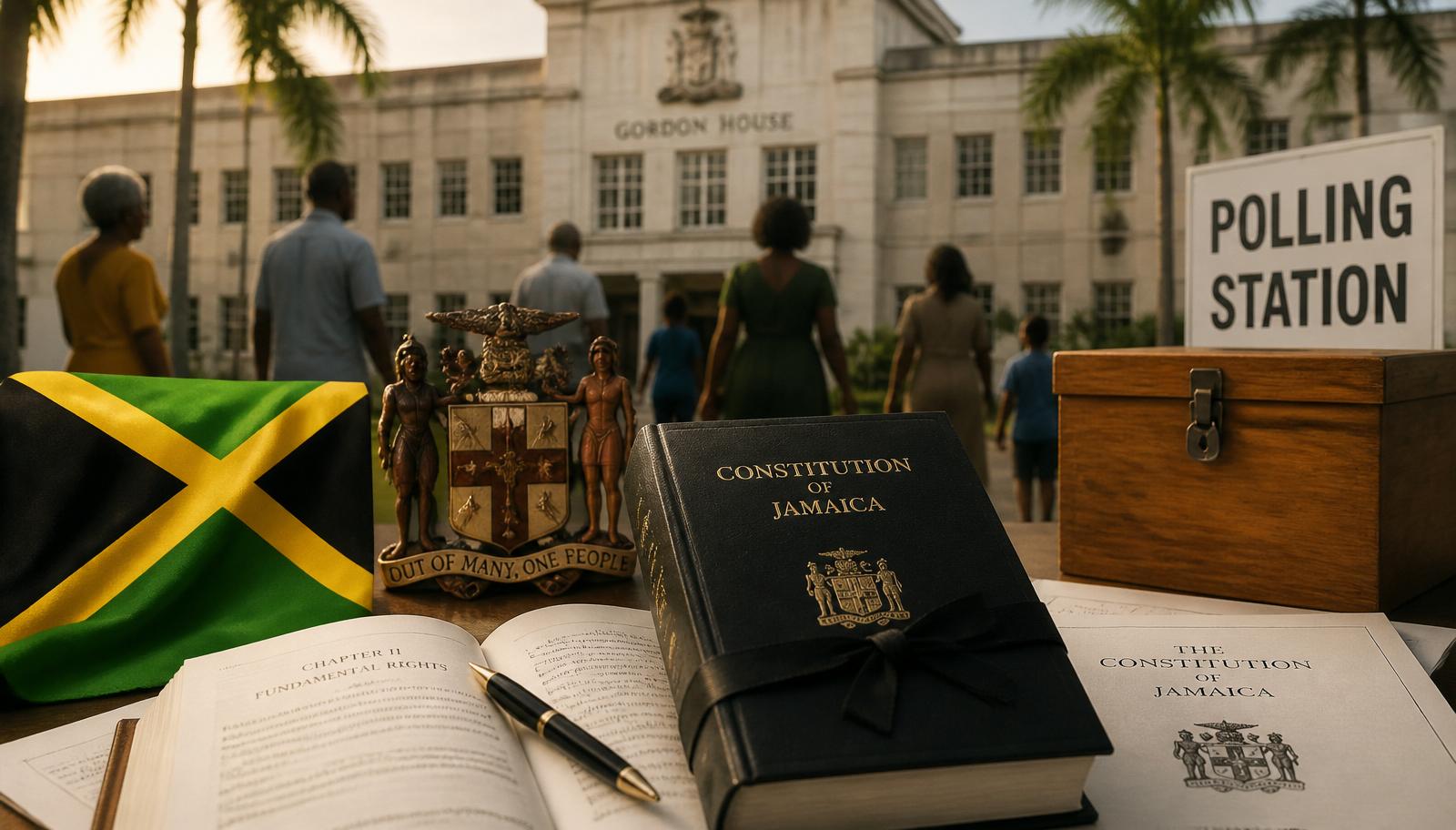
Every functioning democracy depends on citizens who understand how it works. Not the personalities of the moment, not the arguments of the day, but the underlying architecture: who holds power, on what terms, under which rules, and how ordinary people can shape the decisions that affect their lives.
This publication is a foundational, politically neutral guide to that architecture in Jamaica. It is written for readers with little or no prior knowledge of government or politics. By the end of it, a reader should be able to describe how Jamaica is governed, how its democratic institutions function, and how citizens participate in public life — without needing to defer to any political party or ideology to explain it.
Civics is not partisan. It is the shared language of citizenship. What follows is that language, set out plainly.
What Is Civics?
Civics is the study of the rights and responsibilities of citizens and the institutions through which they govern themselves. It is one of the oldest fields of human inquiry, and it is the practical foundation of every democratic society.
Four ideas sit at the centre of civics.
Citizenship is the legal and moral relationship between a person and a state. In Jamaica, citizenship is defined by the Constitution and by the Jamaican Nationality Act. A Jamaican citizen has certain rights — including the right to vote, the right to a Jamaican passport and the right to enter and remain in Jamaica — and certain responsibilities, including obedience to the law and participation in public life.
Democracy is a system of government in which the people are the ultimate source of political authority. In its modern form, democracy is usually representative: citizens elect people to make laws and to run the government on their behalf. It rests on several conditions — free and fair elections, the rule of law, protection of fundamental rights, an independent judiciary, a free press and the peaceful transfer of power.
Civic responsibility is the idea that living in a democracy carries duties as well as rights. Voting is one of them, but civic responsibility extends much further: paying taxes, obeying the law, serving on juries when called, participating in public consultations, holding elected officials to account and contributing to community life.
Constitutional government is government limited and organised by a written constitution. In a constitutional system, the powers of the state are defined by law, not by the will of individual leaders. Laws that conflict with the Constitution can be struck down by the courts. Constitutional government is the framework that makes democracy durable.
Understanding Government
Everyday conversation blurs several distinct terms — government, governance, politics, public administration, the public service. They are related, but they are not the same. Understanding the difference is one of the most useful things a citizen can do.
Government refers to the institutions and persons authorised by the Constitution to exercise public power. In Jamaica, "the Government" in the narrow sense means the Cabinet, the Prime Minister and the ministries — the executive of the day. In a broader sense it includes Parliament, the courts and the public service. Governments change; the institutions of the State are meant to endure.
Governance is broader still. It is the process by which decisions are made and implemented — not only by government, but by the many actors that shape public outcomes, including regulatory bodies, the private sector, civil society and international institutions. Good governance is typically described as transparent, accountable, participatory, responsive, effective and rule-based.
Politics is the ongoing contest over what governments should do. It is how competing interests, values and visions are argued, negotiated and, ultimately, decided. Politics is not a defect in democracy; it is the mechanism through which democracy functions. It becomes dysfunctional only when it displaces evidence, procedure and the rule of law.
Public administration is the practical work of implementing government decisions. It is what happens after a policy is announced — the drafting of regulations, the licensing of activities, the delivery of services, the collection of taxes, the inspection of schools and hospitals.
The public service — often called the civil service — is the permanent, professional body of officials who carry out that administrative work. In Jamaica, the public service is meant to be politically neutral: it serves whichever government is elected. That neutrality is one of the quiet foundations of democratic stability.
Jamaica's Constitutional Monarchy
Jamaica became independent on 6 August 1962. Its Constitution — the Jamaica (Constitution) Order in Council, 1962 — is the supreme law of the country. Every other law, every act of government and every court judgment must be consistent with it. Where a conflict exists, the Constitution prevails.
Jamaica is a constitutional monarchy. The head of state is the reigning monarch of the United Kingdom, currently King Charles III, who is separately the King of Jamaica. The monarch's role is largely ceremonial and is exercised in Jamaica by a resident representative.
The Governor-General is that representative. Appointed by the monarch on the advice of the Prime Minister of Jamaica, the Governor-General performs the head-of-state functions on the ground: giving Royal Assent to bills, opening sessions of Parliament, appointing officers on the advice of the Prime Minister and, in specific circumstances defined by the Constitution, exercising limited discretionary powers.
The Prime Minister is the head of government. By constitutional convention, the Prime Minister is the leader of the party that commands a majority in the House of Representatives. The Prime Minister chairs the Cabinet, sets the direction of government policy and, in practice, exercises the substantive executive power of the state.
The Cabinet is the principal instrument of policy. It comprises the Prime Minister and other ministers appointed on the Prime Minister's advice. Cabinet is collectively responsible to Parliament: ministers speak with one voice on government decisions and answer, individually and together, to the elected House.
There has been ongoing public debate about Jamaica becoming a republic — that is, replacing the monarch as head of state with a Jamaican head of state elected under a new constitutional arrangement. That is a live constitutional question. The rules and institutions described here are those currently in force under the 1962 Constitution.
Separation of Powers
Jamaica's system of government is built on the classical separation of powers into three branches: the executive, the legislature and the judiciary. Each is intended to perform a distinct function and, to some extent, to check the others.
The executive proposes and implements policy. In Jamaica it comprises the Governor-General (acting on advice), the Prime Minister, the Cabinet, ministers and the public service.
The legislature is Parliament. Its primary functions are to make laws, to approve public expenditure through the annual Estimates and to hold the executive to account through debate, questions and committees.
The judiciary interprets and applies the law, resolves legal disputes and — critically — determines whether the actions of the executive and the laws made by Parliament are consistent with the Constitution.
In a Westminster-style parliamentary system such as Jamaica's, the separation between the executive and the legislature is not absolute: ministers are drawn from Parliament and sit in it. The separation of the judiciary, however, is strict. Judicial independence is one of the strongest protections against the abuse of public power.
Parliament
The Parliament of Jamaica is a bicameral legislature — it has two chambers. Together with the Governor-General, they make up the legislative branch.
The House of Representatives
The House of Representatives is the elected lower chamber. Its members — Members of Parliament, or MPs — each represent a geographic constituency. General elections determine the composition of the House, and the party or coalition that wins a majority of seats forms the Government.
The House is the principal legislative chamber. Money bills — bills that impose taxation or authorise public spending — must originate in the House. It also holds the Government to account through parliamentary questions, debate on ministerial statements, motions and committees.
The Senate
The Senate is the appointed upper chamber. Senators are not elected. They are appointed by the Governor-General: a majority on the advice of the Prime Minister and a smaller number on the advice of the Leader of the Opposition.
The Senate reviews and revises legislation passed by the House, initiates certain bills of its own and provides a forum for debate that is somewhat removed from the immediate pressures of constituency politics. It cannot indefinitely block legislation the House has determined to pass, but it plays an important scrutinising role.
Government benches and Opposition
Inside each chamber the elected and appointed members are organised into two groupings. The Government benches are the members whose party forms the executive; they support the Government's legislative programme. The Opposition is the party or parties that did not form the Government; the Leader of the Opposition is a constitutional office with defined roles, including consultation on certain appointments and leadership of the parliamentary scrutiny of the executive. A strong Opposition is not an obstruction to democracy; it is a component of it.
Committees
Parliamentary committees are the workhorses of scrutiny. They examine legislation in detail, review the accounts and performance of government departments, take evidence from officials and members of the public, and produce reports that are laid before Parliament. Committees such as the Public Accounts Committee and the Public Administration and Appropriations Committee play a particular role in financial accountability.
The legislative process
At a high level, a bill in Jamaica typically moves through the following stages: it is drafted (usually by the Office of the Chief Parliamentary Counsel on the instructions of a ministry); introduced in either the House or the Senate; read a first time; debated and read a second time; considered in detail at committee stage; reported and read a third time; sent to the other chamber for the same process; and finally, once both chambers agree, presented to the Governor-General for Royal Assent, after which it becomes an Act of Parliament and part of the law of Jamaica.
The Caribbean Current has a separate cornerstone publication that walks through this process in full, from Cabinet submission to enforcement. This section is a summary; the detail lives there.
The Judiciary
The judiciary in Jamaica is independent of both the executive and the legislature. Judges are appointed on the recommendation of independent commissions and can be removed only for cause under a strict constitutional procedure. This independence is what allows the courts to rule against the Government of the day when the law requires it.
The court structure has several tiers.
Parish Courts — formerly known as the Resident Magistrates' Courts — are the courts of first instance for most civil and criminal matters. They sit in each of Jamaica's parishes and are, for many citizens, the face of the justice system.
The Supreme Court of Jamaica is a superior court of record. It hears the more serious civil and criminal matters, matrimonial and constitutional cases and appeals from lower courts and tribunals. It sits in Kingston and on circuit in the parishes.
The Court of Appeal hears appeals from the Supreme Court and from certain other courts and tribunals. It is Jamaica's principal appellate court.
Beyond the Court of Appeal there is a final court of appeal. For most Commonwealth Caribbean countries this is either the Judicial Committee of the Privy Council in London — the historic final court inherited from the colonial era — or the Caribbean Court of Justice (CCJ) in its appellate jurisdiction, headquartered in Trinidad and Tobago. Jamaica remains, at the date of this publication, a member of the CCJ in its original jurisdiction — which concerns the interpretation of the Revised Treaty of Chaguaramas that governs CARICOM — while the Privy Council remains its final court of appeal in ordinary matters. Whether Jamaica should transition to the CCJ as its final appellate court is a live constitutional question and one of the more significant unresolved debates in Jamaican public life.
Local Government
National institutions are only part of the picture. A great deal of the government that citizens actually encounter — parochial roads, drainage, minor infrastructure, poor relief, markets and abattoirs, cemeteries, building approvals in many parishes, and street lights — is the responsibility of local government.
Local government in Jamaica is organised through Municipal Corporations, one in each parish (with the exception of the combined Kingston and St Andrew Municipal Corporation, and the separately incorporated Municipality of Portmore in St Catherine). Each Corporation is composed of Councillors elected from local electoral divisions, together with certain ex officio members. The Mayor is the head of each Corporation; in most parishes the Mayor is elected by the Councillors from among their number.
Local government elections are separate from general elections and follow their own schedule. Their turnout is often lower than general elections, but their outcomes have a direct effect on the everyday services that shape quality of life at the community level. Local government is where citizenship is often most tangible.
Independent Constitutional Bodies
Beyond the three main branches of government, Jamaica's constitutional order includes a number of institutions designed to be independent of the executive of the day. Their independence is protected by the Constitution or by specific statutes, and their purpose is to safeguard particular public interests that could be compromised if left to the ordinary political process.
The Electoral Commission of Jamaica (ECJ) administers elections and the voter registration process. It is designed to be politically balanced and operationally independent, so that the machinery of elections is trusted by parties and voters alike.
The Auditor General conducts independent audits of the accounts of ministries, departments and statutory bodies. The Auditor General's reports are laid in Parliament and provide the primary basis for parliamentary scrutiny of public spending through the Public Accounts Committee.
The Integrity Commission was established to prevent, detect and prosecute acts of corruption in public life, to receive and investigate declarations of assets by public officials, and to oversee public procurement and contract award. It brought together, under a single body, functions previously performed by several separate agencies.
The Office of the Political Ombudsman has jurisdiction over the conduct of political parties and their representatives, including compliance with codes of conduct during election campaigns.
The Public Defender is an independent constitutional office charged with protecting citizens from injustice or infringement of their fundamental rights by public authorities and with investigating complaints of administrative injustice.
The Director of Public Prosecutions (DPP) exercises the constitutional power to institute and undertake criminal proceedings, take over proceedings and discontinue them. The DPP acts independently of the executive.
These bodies do not remove politics from public life; they discipline it. Their credibility depends on the quality of the appointments made to them, the adequacy of their funding and the respect that Parliament, the executive and the public show for their findings.
Elections
An election is the mechanism through which democracy transfers authority. Everything else in this publication ultimately connects back to the ballot.
Voter registration
To vote in Jamaica, a person must be a Jamaican citizen (or a Commonwealth citizen resident in Jamaica for a specified period), be at least 18 years old and be registered on the voters' list. Registration is administered by the Electoral Commission of Jamaica and is a continuous process, not a one-off pre-election exercise. Registration produces the elector's identification card that is used at the polling station.
Constituencies
Jamaica is divided into constituencies, each of which elects one Member of Parliament to the House of Representatives. Constituency boundaries are periodically reviewed by an independent constituency boundary commission to reflect changes in population.
Voting and election day
On election day, the voter presents themselves at their assigned polling station, is verified against the voters' list, receives a ballot paper and marks it in secret. Election day procedures — the accreditation of party agents, the sealing of ballot boxes, the counting of votes and the announcement of results — are governed by law and administered by the ECJ.
Forming the Government
In a general election the party that wins a majority of seats in the House of Representatives is invited by the Governor-General to form the Government. Its leader becomes Prime Minister and appoints the Cabinet.
When no single party wins a clear majority the result is a hung parliament. In such cases the constitutional convention is that the leader most likely to command the confidence of the House is invited to form a government. This might result in a minority government — one that governs without a majority and depends on the tolerance of other parties — or a coalition government, in which two or more parties formally agree to share power. Coalition governments are common in many parliamentary democracies. They have not been a feature of Jamaican politics to date, but the constitutional mechanism exists.
Parliamentary majority
Once formed, a Government must retain the "confidence" of the House of Representatives. If it loses a formal confidence vote, or if it cannot pass essential legislation such as the Appropriations Bill, it must either resign or advise the Governor-General to dissolve Parliament and call a general election. This is one of the most important constitutional constraints on executive power.
Political Parties
Political parties are the organisations through which citizens with broadly similar views on the direction of the country compete for the authority to govern. In Jamaica, party politics has structured public life since the 1930s and 1940s.
The two dominant political parties in Jamaica's post-independence history are the People's National Party (PNP) and the Jamaica Labour Party (JLP). Both trace their origins to the labour movement and the constitutional reform activism of the 1930s. The PNP was founded in 1938 by Norman Manley. The JLP was founded in 1943 by Alexander Bustamante. Between them they have formed every Government since universal adult suffrage was introduced in 1944.
Several other parties have contested Jamaican elections over the years — including, at various times, small parties on the left, on the right, and on regional or single-issue platforms — but none has established a sustained parliamentary presence comparable to the two major parties. The reasons include Jamaica's first-past-the-post electoral system, which tends to favour large parties, and the deep organisational and cultural roots of the PNP and JLP.
This publication is not concerned with the ongoing political competition between these parties. Their platforms, programmes and leadership evolve, and a fair assessment of them belongs to the day-to-day political conversation. What matters here is that citizens understand what parties are, why they exist and how they fit into the constitutional system: they are the organised vehicles through which democracy delivers a Government and an Opposition.
Understanding Political Ideologies
Political ideologies are systems of ideas about how society should be organised, what the state should do, and how competing values — liberty, equality, community, security, opportunity — should be balanced. They provide the vocabulary of political debate.
This section introduces the major ideological traditions descriptively. It does not endorse any of them.
Liberalism, in the classical sense, emphasises individual liberty, the rule of law, limited government, freedom of expression, private property and equality before the law. Modern liberal traditions extend these ideas to include support for civil rights, pluralism and, in many cases, a role for the state in ensuring equal opportunity.
Classical liberalism in particular is associated with limited state intervention in the economy, free trade and strong protection of individual rights against state power.
Conservatism emphasises continuity, tradition, established institutions, social order and the accumulated wisdom of experience. Conservatives tend to be sceptical of rapid, sweeping change and prefer gradual reform. Different conservative traditions place different weight on economic freedom, social cohesion and national identity.
Socialism is a broad family of political traditions that emphasise collective ownership or strong public control of key sectors of the economy, redistribution of wealth and the pursuit of substantive equality. Historically it has ranged from revolutionary movements aimed at abolishing capitalism to reformist movements working within democratic systems.
Democratic socialism is a strand within that family that commits explicitly to achieving socialist objectives through democratic means, respecting elections, civil liberties and the rule of law. It rejects one-party rule and revolutionary seizure of power.
Social democracy overlaps with democratic socialism but has come, in modern usage, to describe a distinct tradition: a market economy combined with a strong welfare state, robust labour rights, universal public services and progressive taxation. Social democratic parties historically dominated the politics of much of northern and western Europe in the second half of the twentieth century.
Centrism is not a single ideology but a disposition — a preference for pragmatic, moderate policy positioned between the main left and right traditions. Centrist parties often combine market economics with an active but limited role for the state.
Nationalism emphasises the identity, interests and self-determination of a particular nation. It can take civic forms, grounded in shared citizenship and constitutional values, or ethnic forms, grounded in shared ancestry, language or religion. Anti-colonial nationalism — which drove Caribbean independence movements in the mid-twentieth century — is a particularly important tradition in Jamaican history.
Progressivism is a broad label for movements that advocate reform in the direction of greater social, economic or political equality. It has taken different forms in different eras and countries.
These traditions rarely appear in pure form. Real-world political parties combine ideas from more than one tradition, and their positions evolve. It is more useful to think of ideologies as a spectrum, and of parties as constellations of policies that shift over time.
Where do Jamaica's political parties fit?
Political scientists have generally described the People's National Party as having emerged from the social democratic tradition, with periods — particularly in the 1970s — of explicit democratic socialist commitments, and periods since in which its economic policy has moved closer to the centre. The Jamaica Labour Party has generally been described as centrist to centre-right, with a stronger emphasis at various times on free enterprise, private-sector-led growth and traditional social values, and with its own periods of pragmatic movement across that spectrum.
These are general characterisations, not permanent labels. Party platforms, leadership and policy priorities change. Voters should form their own view of where each party currently stands by reading its published manifesto, its budget positions and the record of its representatives in Parliament — not by relying on historical labels.
Public Policy
Public policy is the deliberate course of action, or inaction, chosen by the Government to address a public problem. It is how ideas about what the state should do become actual programmes, regulations and services.
A typical policy cycle in Jamaica moves through several stages.
Problem identification — a matter is recognised as needing government action, whether raised by ministers, the public service, Parliament, civil society, the media or in response to an external event.
Policy development — the responsible ministry, often supported by technical agencies and, where appropriate, external experts, develops options, analyses their likely effects and prepares a Cabinet Submission. Consultation with stakeholders is a standard part of good policy development, though the depth and openness of consultation varies.
Cabinet decision — the Cabinet considers the submission and takes a decision. Cabinet decisions are collective and confidential; ministers are bound by the decision once taken.
Parliamentary debate and legislation — where the policy requires new law or amendments to existing law, the responsible minister introduces a bill in Parliament. Parliamentary debate provides a public forum in which the policy is examined, criticised and amended.
Implementation — once approved, the policy is implemented by the responsible ministry, agencies and, in some cases, local government. Implementation is often where the practical success or failure of a policy is determined.
Monitoring and oversight — the implementation is monitored by the ministry, subject to audit by the Auditor General, and open to scrutiny by parliamentary committees and by the public.
Review — policies are periodically reviewed and adjusted in light of experience, evaluation and changing circumstances.
Public policy is not the same as legislation. Much of what governments do — how they allocate a fixed budget, how they set priorities within an existing legal framework, how they respond to crises — is policy without new law.
Public Finance
Public finance is the branch of government that concerns raising, allocating and spending public resources. It is, in many ways, the most consequential area of policy: money is where priorities become real.
Taxation is the principal source of government revenue in Jamaica. It includes income tax on individuals and companies, consumption taxes such as General Consumption Tax (GCT), customs duties and a range of special levies and fees. The Tax Administration Jamaica is responsible for collection.
The national budget is presented to Parliament each fiscal year by the Minister of Finance. It sets out the Government's projected revenues, its planned expenditures across ministries and agencies and its borrowing intentions. The Estimates of Expenditure are debated in Parliament and approved through the Appropriations Act, which is the legal authority for public spending.
Public debt is what the Government owes to domestic and foreign creditors. Jamaica has, historically, carried one of the higher public debt burdens in the Caribbean, and its management of that debt — through fiscal consolidation programmes, debt exchanges and adherence to fiscal rules — has been one of the defining policy stories of the past two decades.
Government spending covers salaries and wages of the public service, delivery of public services such as health and education, transfers and subsidies, capital investment in infrastructure, and interest on public debt. The composition of spending — how much goes to each of these categories — is a direct indicator of a government's real priorities, whatever its stated rhetoric.
Independent scrutiny of public finance is provided by the Auditor General and by parliamentary committees, particularly the Public Accounts Committee and the Public Administration and Appropriations Committee. Their reports are among the most important primary sources for anyone who wants to hold the Government to account on its use of public money.
Rights and Responsibilities
Citizenship is a two-way relationship. Citizens have rights guaranteed by the Constitution; they also have responsibilities without which those rights cannot be sustained.
The Charter of Fundamental Rights and Freedoms
In 2011, the Constitution of Jamaica was amended to replace the original Chapter III with a Charter of Fundamental Rights and Freedoms. The Charter, contained in Chapter III of the Constitution as amended by the Constitution (Amendment) Act, 2011, sets out the fundamental rights and freedoms that the State is obliged to respect and protect.
These include the right to life, liberty and security of the person; freedom of thought, conscience, belief and observance; freedom of expression; freedom of peaceful assembly and association; freedom of movement; the right to equality before the law and equitable and humane treatment by any public authority; the right to protection from search of the person and property; the right to protection of privacy of the home and other property; and the right to protection of the child, among others.
The Charter is enforceable in court. Any person who alleges that a right has been contravened by the State may apply to the Supreme Court for redress.
Responsibilities of citizens
The responsibilities of citizens are less often written down but no less important. They include obeying the law, paying taxes, respecting the rights of others, participating in public life through voting and other forms of engagement, serving on juries when called and, more broadly, contributing to the community of which one is a part.
Peaceful protest is a constitutionally protected form of civic participation, provided it complies with the law. It has been a significant instrument of democratic change throughout Caribbean history.
Freedom of expression — including the freedom of the press — is protected under the Charter. It carries with it the responsibility to exercise it honestly, without incitement to violence or hatred and with respect for the reputations of others.
Voting, as discussed above, is both a right and a responsibility. A low turnout is a signal that a democracy has work to do in engaging its citizens.
Volunteerism — from formal service in civic organisations to informal help in one's community — sustains large parts of Jamaican life that the state, on its own, could not.
How Citizens Can Influence Government
Voting is the most visible act of citizenship, but it is not the only one. Between elections, there are many ways for citizens to influence government.
Contacting your Member of Parliament is a direct channel. MPs hold constituency office hours, respond to correspondence and raise matters in Parliament. A well-argued letter or a persistent group of constituents can shape a policy question far more than public commentary alone.
Contacting your Councillor is equally important for local matters — roads, drainage, community facilities and licensing. Councillors are often more accessible than national representatives on the issues they are responsible for.
Petitions — organised submissions signed by multiple citizens — can be presented to Parliament or to Ministers. Digital petitions have become a common means of demonstrating the breadth of concern about an issue.
Town halls and public consultations are opportunities to speak directly to decision-makers. Attending them, asking questions and making submissions is one of the most effective forms of civic engagement.
Parliamentary committee submissions are open to the public in many cases. When a committee is examining a bill or an issue of public concern, written and, sometimes, oral submissions from citizens and organisations are received and considered.
Advocacy organisations — trade unions, professional associations, chambers of commerce, faith-based organisations, environmental groups, community associations — are the institutional infrastructure of civil society. Joining, funding or working with organisations aligned with one's concerns is often more effective than acting alone.
Responsible media participation — writing letters to editors, calling in to talk radio, contributing opinion pieces, participating in online discussion — is part of the democratic conversation. It carries a responsibility to be accurate and civil.
Independent journalism deserves particular support. A robust free press is one of the most important checks on government power, and it depends on citizens who value and pay for its work.
Glossary
Act of Parliament — a bill that has passed both chambers of Parliament and received Royal Assent, thereby becoming part of the law of Jamaica.
Bill — a proposed law under consideration in Parliament.
Cabinet — the Prime Minister and other ministers, collectively responsible for government policy.
Charter of Fundamental Rights and Freedoms — Chapter III of the Constitution of Jamaica as amended in 2011, setting out fundamental rights.
Constituency — a defined geographic area that elects one Member of Parliament.
Constitution — the supreme law of the country, which defines and limits the powers of the State.
Constitutional monarchy — a system in which a monarch is head of state within limits set by a constitution.
Democracy — a system of government in which political authority rests with the people.
Executive — the branch of government that implements policy and administers public affairs.
First past the post — an electoral system in which the candidate with the most votes in a constituency wins the seat, without any requirement for an absolute majority.
Governor-General — the resident representative of the monarch in Jamaica.
Judiciary — the branch of government comprising the courts.
Legislature — the branch of government that makes law; in Jamaica, Parliament.
Local government — the sub-national tier of government responsible for parish-level services.
Minister — a member of Cabinet responsible for a portfolio of government responsibilities.
Opposition — the party or parties in Parliament that do not form the Government.
Parliament — Jamaica's legislature, consisting of the Governor-General, the House of Representatives and the Senate.
Political party — an organisation that competes for public office on the basis of a shared programme.
Public administration — the practical work of implementing government decisions.
Public policy — a deliberate course of action, or inaction, adopted by government to address a public issue.
Public service — the permanent, professional body of officials who carry out government administration.
Rule of law — the principle that all persons and institutions, including the State, are subject to and accountable under the law.
Separation of powers — the constitutional distribution of authority among the executive, legislature and judiciary.
Further Reading
The Caribbean Current publishes companion cornerstone pieces on the topics introduced here. Readers who want to go further can start with:
- Understanding Jamaica's Parliamentary System — how Westminster-style democracy actually works in Jamaica.
- How Laws Are Made in Jamaica — a step-by-step walk through the legislative process.
- Government Accountability — how ministries, ministers and public bodies are held to account.
- Understanding Public Debt — the political economy of borrowing and repayment.
- What Is CARICOM? — Jamaica's place in the Caribbean Community.
For primary sources, the Constitution of Jamaica, the Ministry of Justice, the Houses of Parliament of Jamaica, the Electoral Commission of Jamaica, the Auditor General's Department and the Integrity Commission publish their own materials online.
Understanding the machinery of government is not a partisan act. It is a precondition for the kind of democratic conversation Jamaica deserves.
Sources & References
Verify every claim in this article
The Caribbean Current links to primary sources whenever possible. Direct links to official documents are marked below.
- The Constitution of Jamaica (Jamaica (Constitution) Order in Council, 1962, as amended)primary
- The Charter of Fundamental Rights and Freedoms (Constitution (Amendment) Act, 2011)primary
- Houses of Parliament of Jamaicagovernment
- Electoral Commission of Jamaicagovernment
- Ministry of Justice, Jamaicagovernment
- Office of the Auditor General of Jamaicagovernment
- Integrity Commission of Jamaicagovernment
- Office of the Political Ombudsmangovernment
- Office of the Public Defendergovernment
- Office of the Director of Public Prosecutionsgovernment
- Ministry of Local Government and Community Developmentgovernment
- Caribbean Court of Justiceprimary
- Judicial Committee of the Privy Councilprimary
Related
More from The Caribbean Current
How Laws Are Made in Jamaica
Every law that governs life in Jamaica passes through the same procedure. This publication walks through the legislative process step by step, with references to the Constitution and the Standing Orders of Parliament.
The Caribbean Current · Jul 1, 2026 · 9 min read
What Is CARICOM?
The Caribbean Community is one of the oldest continuously functioning regional organisations in the developing world. This publication explains what CARICOM is, what it does and where to read the primary documents.
The Caribbean Current · Jun 25, 2026 · 10 min read
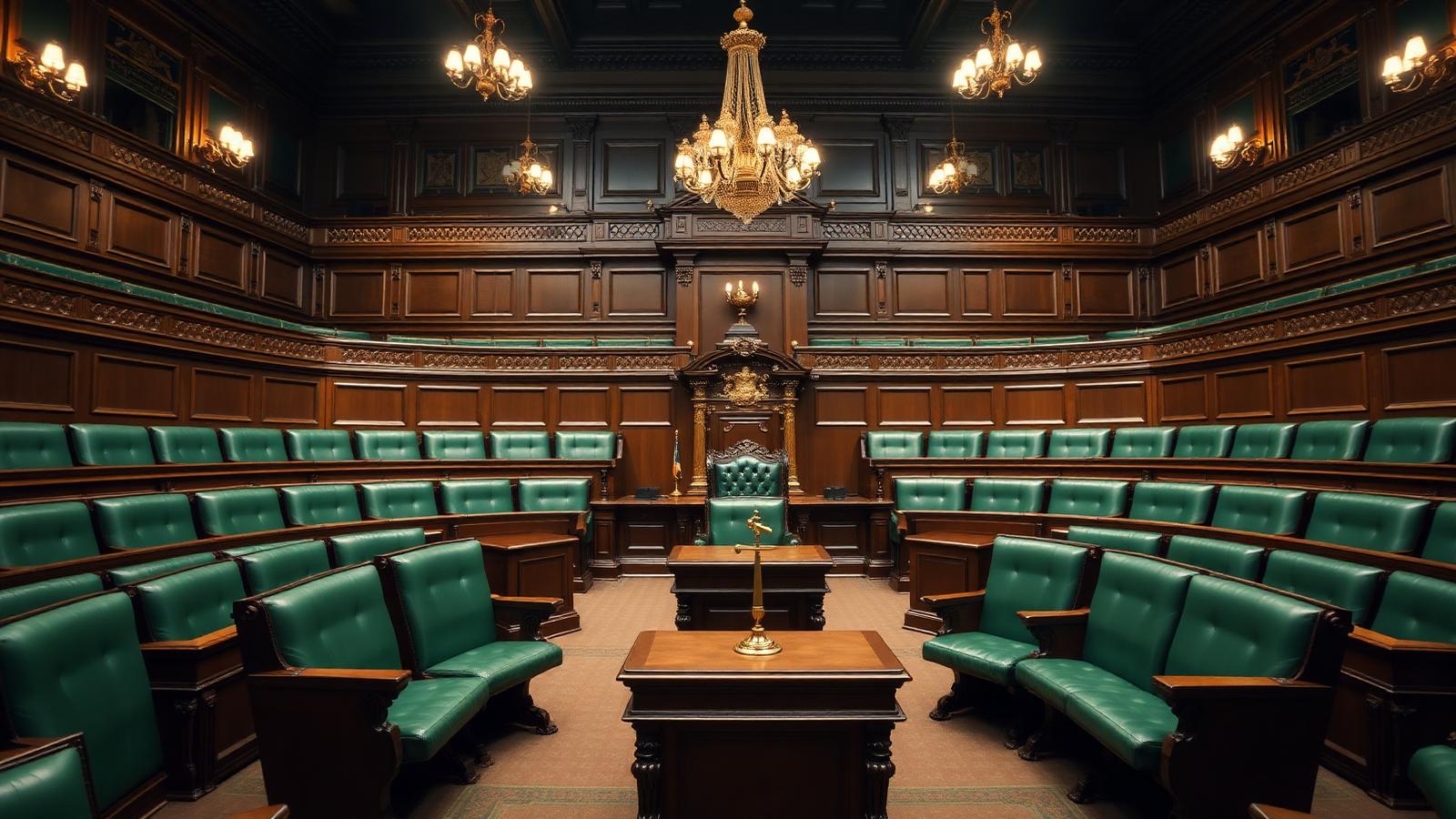
Understanding Jamaica's Parliamentary System
Jamaica's Parliament is the foundation of the country's constitutional democracy. This publication explains how it is structured, how power is distributed, and where to read the primary documents that define it.
The Caribbean Current · Jun 16, 2026 · 10 min read